
Most land clearing companies get work the same way they always have: a call from someone who knows someone, a Craigslist post, maybe a flyer at the hardware store. That works until it doesn’t. When spring is slow or a developer pulls back, there’s nothing in the pipeline.
The companies that stay busy year-round aren’t just better at clearing land. They have multiple lead sources running at the same time. Some are digital. Some are old-school. All of them work if you build them right.
Here are the eight best sources for land clearing leads in 2026, and how to make each one worth your time.
The 8 Best Land Clearing Lead Sources
1. Google Search
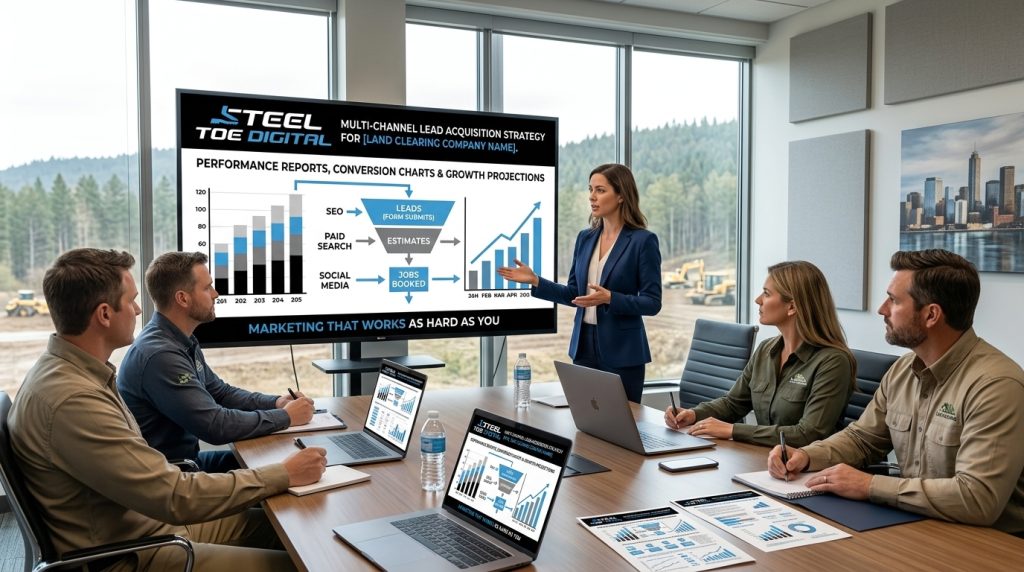
This is the highest-intent lead source you have. Someone searching “land clearing near me” or “lot clearing [county name]” already has a project. They’re not browsing. They’re ready to call.
The problem is that showing up in those results takes time and work. You need a Google Business Profile that’s filled out completely, a website with content that matches what people search, and a handful of consistent reviews coming in each month. Most land clearing companies haven’t done any of that, which means the top spots are available if you’re willing to build for them.
Expect 3-6 months to see meaningful movement, depending on how competitive your county is. In rural markets, it’s often faster. This is a long-term system, not a quick fix. See the full breakdown in our guide to land clearing SEO.
2. Google Ads
If you want land clearing leads now, Google Ads is the fastest path. You can have a campaign live in 48 hours and be showing up for searches the same week.
Land clearing is well-suited to paid search because the job tickets are high. A lot clearing job that runs $3,000-$8,000 only needs to close a handful of times per month to make a Google Ads budget work. Most markets have moderate competition on land clearing keywords, so your cost per click is lower than what plumbers or roofers pay.
The risk is that you’re paying per click whether the click converts or not. A poorly built campaign burns money fast. Build the campaign right, and it’s one of the most profitable levers you have. We cover this in detail in our Google Ads guide for land clearing companies.
3. Builder and Developer Relationships
One general contractor relationship can fill your schedule for a full season. Developers who are buying and subdividing rural land need clearing done on every lot before anything else can happen. That’s not one job. That’s a contract.
Two ways to build these relationships:
Join your local NAHB chapter. The National Association of Home Builders has chapters in almost every metro area. The people in the room are the people buying land and building on it. Show up regularly. Buy lunch. Don’t pitch. Just be the person they know when the topic of land clearing comes up.
Attend county planning board meetings. This sounds boring. It is also where you find out who is buying large parcels and what’s being permitted before it ever gets to Google. Developers are in those meetings. Engineers are in those meetings. Show up twice and you’ll know more about your local pipeline than your competitors do.
4. Direct Mail to New Rural Land Buyers
This is the most underused lead source in land clearing, and it works.
County deed records are public. In most counties, you can pull a list of recent property transfers filtered by acreage. Anyone who bought 2 or more acres in the last 60 days is a likely prospect. They just bought rural land. They may need it cleared before they can build, fence, or use it.
A simple postcard with one message lands well: “Just bought land? Get it cleared and ready to build.” Include a phone number and a URL. Keep it short.
Rural counties often have lower mailing costs and fewer competitors running direct mail. The response rate won’t be huge, but the ticket size on the jobs that call makes the math work. This is also a system you can set up once and run on autopilot if you pull the list monthly.
5. County Permit Offices
In many counties, land clearing above a certain acreage requires a grading or land disturbance permit. Property owners who don’t know this often find out when they call the county to ask about building permits.
The permit office staff gets asked for contractor referrals constantly. If they know your name and have a card on file, you get those calls.
Stop by the office in person. Introduce yourself. Leave a stack of business cards. Ask if there’s a preferred contractor list they share with the public. Some counties have one. Some don’t. Either way, the staff remembers the contractors who took the time to show up.
6. Civil Engineers and Land Surveyors
Before a parcel gets cleared, it usually gets surveyed. And before it gets built on, a civil engineer often draws the site plan. Both of those professionals work upstream of you, and they talk to the same property owners you want to reach.
A referral from a surveyor or engineer carries weight. The property owner already trusts them. If they say “call this land clearing company,” most of them will.
Build these relationships the same way you build the GC relationships: show up in person, buy lunch, stay in contact. It takes a few months to stick. When it does, you’ll get calls you never would have found through advertising.
7. Lead Platforms: Angi, HomeAdvisor, Thumbtack
Land clearing has less competition on these platforms than plumbing, electrical, or HVAC. That matters, because the shared-lead model works better when fewer contractors are competing for the same lead.
These platforms are not a long-term strategy. You’re paying $30-$90 per lead that also goes to two or three other companies. The conversion rate is lower than inbound search. But if your schedule has gaps and you need jobs this week, they fill that gap while your other systems build.
Use them tactically. Don’t rely on them as your primary source. The moment you do, you’re on a treadmill that gets more expensive every year.
8. Facebook and Rural Community Groups
Drone footage of a clearing job sells itself. A five-second clip of a skid steer pushing timber on a 10-acre lot, with a before and after at the end, will get shared in rural Facebook groups more than any other type of content.
Rural and agricultural Facebook groups are some of the most engaged local communities online. People in these groups are the exact audience for land clearing: property owners, hobby farmers, people building barns, rural homeowners. Post before-and-after photos of your jobs. Show the process. Let the work do the talking.
This doesn’t cost money, but it costs time. Commit to posting 2-3 times per week with real job content, and you’ll see inbound messages within the first month. See how this fits into a broader strategy in our land clearing marketing guide.
Which Sources Should You Start With
If you have nothing running right now, start with two things in parallel:
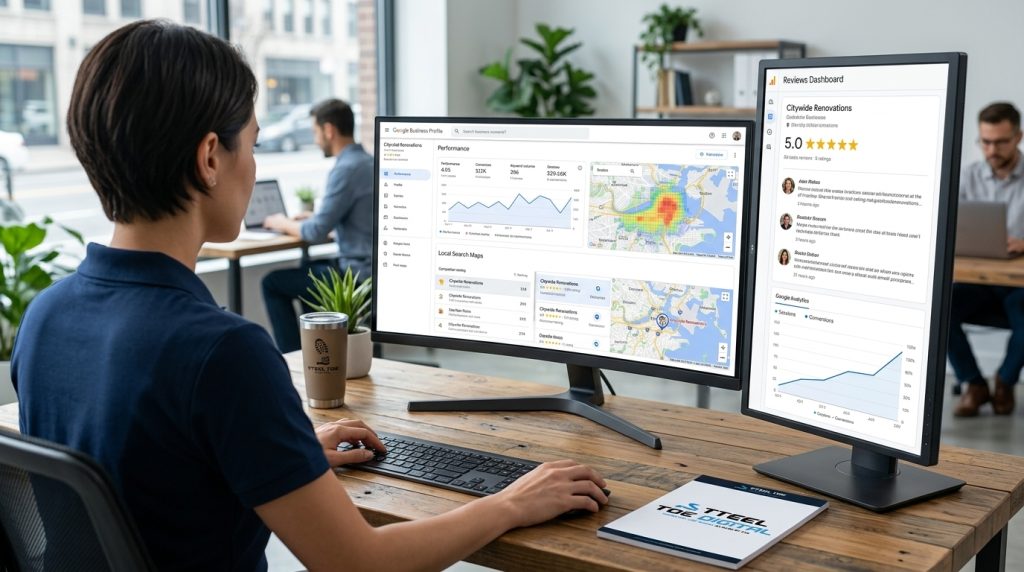
First, set up your Google Business Profile correctly and ask every happy customer for a review. This costs nothing and starts building your long-term organic presence. Pair it with the tactics in our land clearing website design guide to make sure your site converts the traffic.
Second, launch a Google Ads campaign with a modest daily budget. Even $30-$50 per day in a mid-size rural market will get you calls while the organic work builds. Once you know your cost per lead, you can scale the budget up.
After those two are running, add the relationship-based sources: GC networking, surveyors, the permit office. These take longer to produce but they produce the highest-quality leads you’ll get.
Direct mail and Facebook are supplemental. They work. They’re just not where most companies should start if they have limited time and budget.
How Much Do These Sources Actually Cost
Here’s an honest breakdown of what you’re looking at in most markets:
| Lead Source | Typical Cost Per Lead | Lead Quality |
|---|---|---|
| Google Organic (SEO) | $0 per lead once ranked | High intent |
| Google Ads | $40-$120 per lead depending on market | High intent |
| Direct Mail | $15-$40 per response depending on list and creative | High intent |
| Angi / HomeAdvisor | $30-$90 per shared lead | Medium (shared with competitors) |
| GC / Referral Networks | Cost of your time + meals | Very high (pre-sold) |
| Facebook Groups | Cost of your time | Medium (early stage) |
The math changes based on your market size, your average job ticket, and your close rate. A company with a $5,000 average job and a 40% close rate can afford a much higher cost per lead than a company doing smaller residential lots at $1,200 each.
Run the numbers for your operation before you decide where to spend. For more context on how the best land clearing companies in the country approach this, see our breakdown of top land clearing operations.

FAQ
How much do land clearing leads cost?
Cost varies by source and market. Google Ads leads typically run $40-$120 each in mid-size markets. Shared leads through Angi or HomeAdvisor run $30-$90. Organic search leads from SEO cost nothing per lead once you’ve ranked, but the SEO work to get there takes 3-6 months and requires consistent effort. Referral-based leads from builders and engineers cost only your time.
How do I get commercial land clearing contracts?
Join your local NAHB chapter and attend county planning meetings. That’s where the GCs, developers, and engineers are. Commercial contracts don’t come from Google searches. They come from relationships built over time with people who have recurring site prep needs. One GC relationship can mean 10-20 jobs per year. Show up, stay in contact, and do good work on the first job. That’s the full strategy.
What’s the fastest way to get land clearing jobs this week?
Google Ads is the fastest path to inbound leads. A campaign can be live within 48 hours and generating calls that week. The other fast option is lead platforms like Angi or Thumbtack, which can produce leads immediately even if the quality is lower. Posting before-and-after content in local Facebook groups can also generate calls within days if you’re in a rural market with engaged community groups.
Do I need a website to get land clearing leads?
You need something people can find and trust when they look you up. A bare-minimum site with your services, service area, and a way to contact you is better than nothing. But a site with photos of your work, real reviews, and pages that match what people search for will outperform a placeholder every time. Most people who get a referral or see your truck will Google you before they call. If they don’t find anything credible, they call someone else.
Is SEO worth it for land clearing companies?
Yes, in most markets. The keyword volumes for land clearing are lower than plumbing or HVAC, which means less competition for the rankings. That also means a smaller SEO investment can get you to page one faster. The companies that have put 6-12 months of consistent work into their local SEO are getting calls they don’t pay per-lead for. That’s the model.
More Land Clearing Jobs Start Here
Land clearing companies that stay busy year-round aren’t lucky. They built systems that bring in leads from multiple directions at the same time.
SteelToe Digital builds those systems for land clearing and site prep companies. From Google rankings to paid search to the website that converts the traffic, we’ve worked with trades businesses that do exactly this kind of work. We know the jobs, we know the seasonality, and we know what actually moves the needle.
Get a Free Strategy Call
No pitch. No pressure. Just a look at what you have running and where the gaps are.