Social media won’t replace your Google ranking. If someone’s searching “tree removal near me” at 10pm after a storm, they’re going to Google first. But social media does something Google can’t: it keeps you visible to people who aren’t searching yet.
Tree service is one of the most naturally visual trades on the planet. Massive trees coming down. Clean stumps where a hazard used to be. Before-and-after shots that stop a scroll cold. You already have the content. Most tree companies just aren’t using it.
Here’s what to post, which platforms actually matter, and a simple weekly rhythm you can stick to without hiring anyone.
Why Tree Services Are Built for Social Media
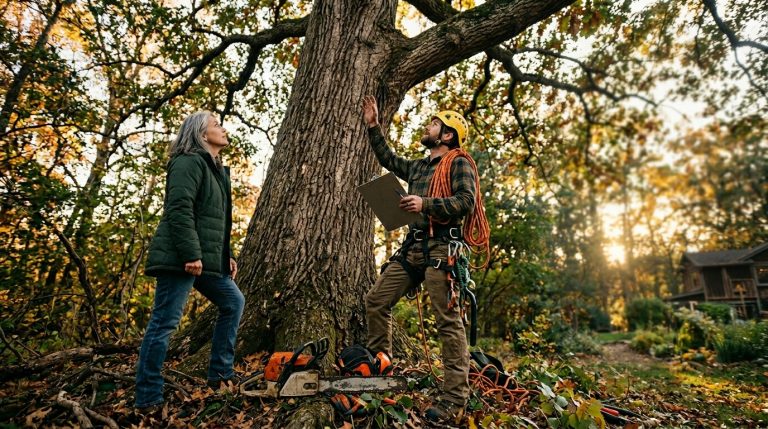
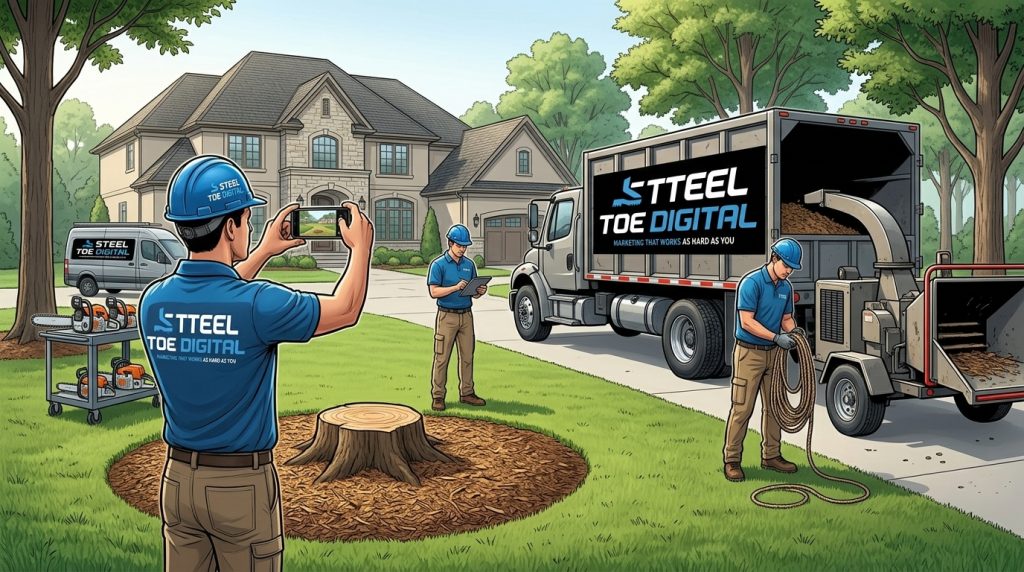
Most trades are hard to photograph. Plumbing is pipes and crawlspaces. HVAC is metal boxes on concrete pads. Tree work is a 100-foot oak hitting the ground in a neighborhood everyone on the block can see from their driveway.
That visibility is an asset. A neighbor watches your crew work for four hours, does a clean job, and leaves the property looking better than when you arrived. Two things happen: they remember your company name, and they tell other people. Social media scales that exact effect to people who weren’t there.
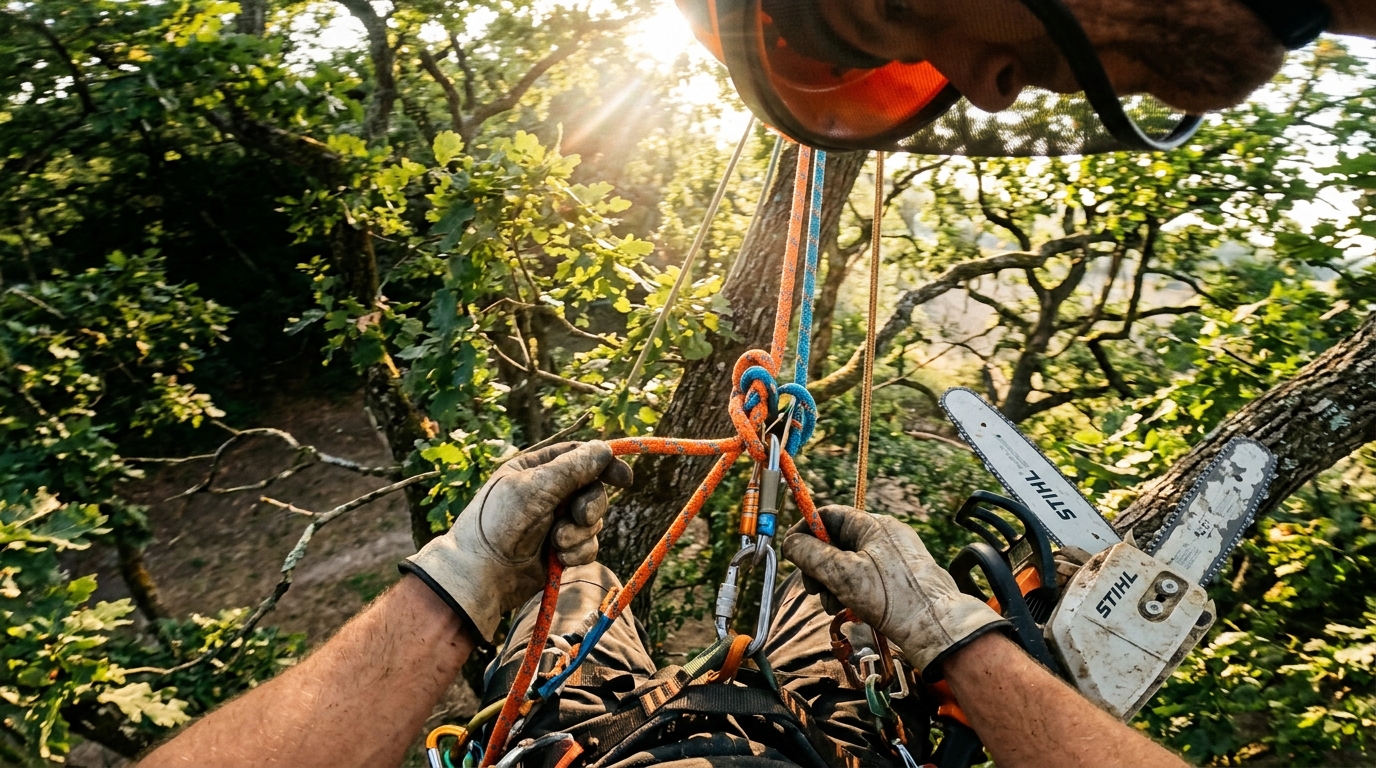
Before-and-after content performs well on every platform because it shows real work and a real outcome in one frame. Safety and professionalism come through clearly in video. And trust matters more in tree service than almost any other trade, because customers are letting someone run a chainsaw near their house. Seeing a real crew with real equipment doing real work builds that trust before the phone call.
Facebook: Your Primary Community Platform
Facebook is where your customers actually spend time. Not just on the platform in general, but in local neighborhood groups where tree questions come up constantly.
Your business page should be posting regularly, but the groups are the underused opportunity. When someone in a local Facebook group asks “anyone know a good tree company?” that’s a warm lead with no ad spend attached. If your name comes up there three times a month from different neighbors recommending you, that’s worth more than most paid campaigns.
On your business page, post:
- Job photos and before/after from every significant removal or trim job
- Storm response posts when the weather turns: “We’re taking emergency calls in [city] today, call us at [number]”
- Seasonal reminders: “Spring is a good time to have your trees assessed before storm season. We’re booking now.”
- Team and equipment shots that show you’re a real, established operation
- Screenshots of 5-star Google reviews when you get them
In community and neighborhood groups:
Be a resource, not an ad. Answer questions about tree health, storm damage, when a tree needs to come down versus when it can be saved. Mention your company at the end when it’s relevant, not as the opening line. People in groups can smell a sales pitch from three sentences away. The ones who give genuine advice are the ones who get the calls.
Instagram: Your Visual Portfolio
Instagram rewards exactly what tree service produces: high-quality visual content with a clear transformation.
Before/after carousel posts consistently outperform single-image posts on Instagram because people swipe through them. Lead with the worst before shot you have and end with the cleanest after. The contrast is the content.
Reels are worth the extra effort. A timelapse of a full tree removal, start to stump, edited down to 60-90 seconds, gets more organic reach than almost anything else you can post. You don’t need a film crew. A crew member with a phone propped against a cooler is enough.
Post types that work:
- Before/after carousel posts (highest engagement, most saves)
- Reels: timelapse removals, crane work, large equipment in action
- Story highlights organized by service type: Removal, Trimming, Storm Damage, Stump Grinding
- Behind-the-scenes crew clips that show the work isn’t just you and one other guy
Hashtags worth using: #TreeRemoval, #CertifiedArborist, #TreeService, #[YourCityName]Trees, #[YourCityName]. Keep the list tight and local. Forty hashtags don’t outperform eight good ones.
Instagram won’t be your top lead source, but it functions as a visual resume. When someone finds you on Google and looks you up on Instagram before calling, what they see either builds confidence or doesn’t. Make sure it builds.
Nextdoor: Your Highest-Converting Platform
Nextdoor doesn’t have the reach of Facebook or Instagram, but it has something more valuable: proximity. Every post on Nextdoor is visible to people in a specific neighborhood. Tree service is a neighborhood business. The fit is direct.
Every neighborhood sees a spike in tree-related questions after a storm. Fence damage, trees down on power lines, large limbs on roofs. Someone always posts asking for recommendations. If you’ve been active on Nextdoor before the storm, your name is already familiar when that post goes up.
How to set it up:
- Claim your business page and fill it out completely
- If you live in your service area, be active as a resident too, not just as a business
- Respond to any tree-related questions with real advice, not just your phone number
- When a storm hits, post safety tips first: what to do if a tree is on your roof, when to call the power company versus a tree service, what to look for in storm damage. Then mention you’re available for emergency calls.
The storm strategy matters here. The tree companies that post “we’re taking emergency calls, call now” the second a storm ends are easy to ignore. The ones that posted helpful safety information three days before are the ones people call. Position first, sell second.
YouTube: Content That Keeps Working
YouTube is the only platform on this list where content compounds over time. A Facebook post has a lifespan of 48 hours. A YouTube video about “how to tell if a tree is dead” keeps getting searched and watched for years.
Google owns YouTube. Videos rank in Google search results. That means a 5-minute video explaining the signs of a dying tree can show up when someone searches that question on Google, not just YouTube. That’s a second search channel working in your favor without additional ad spend.
Video topics that work:
- “Signs your tree needs to be removed” (high search volume, high intent)
- “How we safely removed a [X] foot oak in [City]” (local SEO value)
- Equipment walk-throughs that show a professional operation vs. a guy with a pickup and a chainsaw
- “What to do after a storm damages your trees” (positions you as the expert, captures storm season searches)
You don’t need to post weekly. One video a month, done consistently over a year, builds a library that works while you’re running crews. Twelve videos is twelve ongoing traffic sources. Most of your competitors have zero.
Sample Weekly Content Calendar
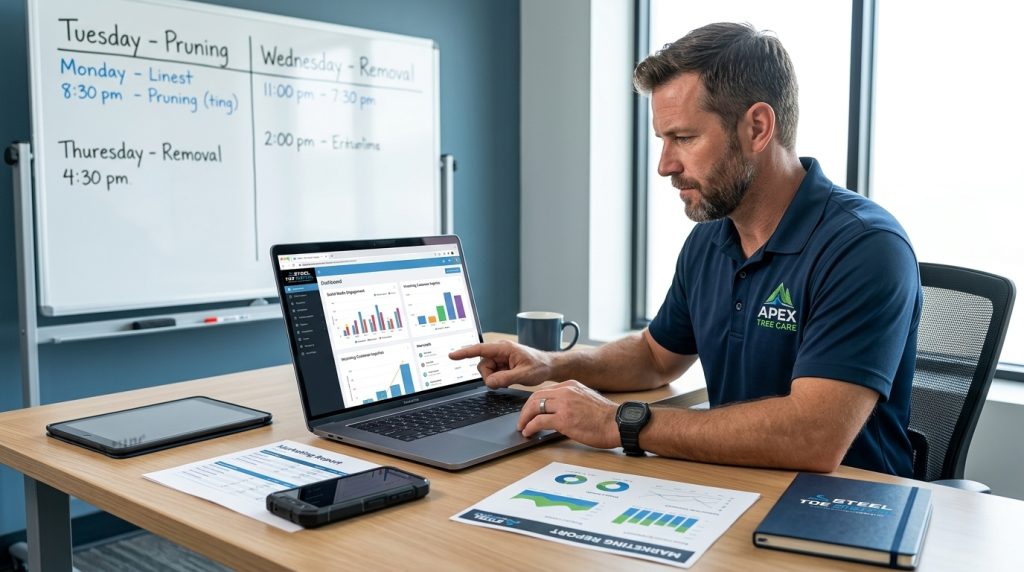
You don’t need a social media manager to run this. You need a system and someone on your crew willing to take photos.
That’s roughly 8-10 posts per month across all platforms. It takes less than two hours a week if someone is taking photos on job sites. The photos are the hardest part. Once you have them, the posting takes minutes.
A tool like Buffer or Later lets you schedule posts in advance. Spend 30 minutes on Sunday queuing up the week, and the platforms handle the rest.
Storm Season Social Media Strategy
Storm season is when tree service companies make a significant portion of their annual revenue. Social media either multiplies that or misses it entirely.
Pre-storm (days before a system rolls in):
Post a property preparation checklist. “Five things to check on your trees before a storm.” This positions you as the expert and gets shared by neighbors before you ever mention your phone number. It also gets engagement from people who will need you after the storm passes.
During and immediately after the storm:
This is where speed matters. Post on Facebook and Instagram that you’re taking emergency calls and include your number in the post, not just in your bio. People don’t click through during an emergency. Put the information in front of them directly.
Post-storm cleanup:
Before/after shots from storm damage cleanup are some of the most engaging content tree companies ever post. A 40-foot limb through a roof, cleaned up and property restored, is dramatic. Post it. Neighbors who watched the job are already thinking about their own trees.
The companies that run this sequence before, during, and after every significant storm build name recognition that no ad campaign can replicate. When someone has a tree question six months later, they remember who was helpful when it mattered.
How Social Media Fits Your Bigger Marketing Picture
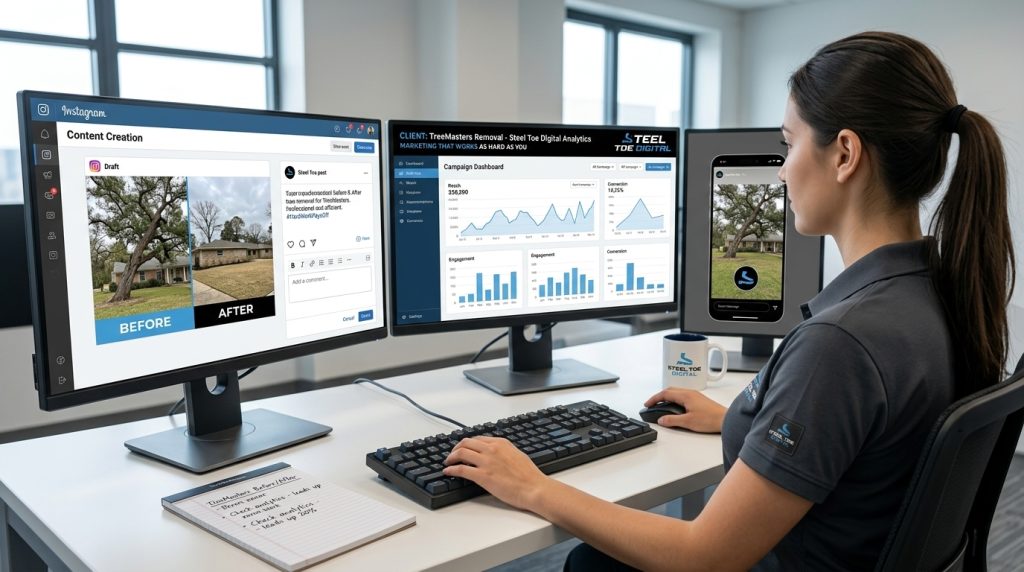
Social media alone won’t fill your schedule. It works as a trust layer on top of your Google presence. Someone finds you through a Google search, visits your Facebook page, sees a stream of real job photos and 5-star reviews, and calls with more confidence than they otherwise would. That’s the sequence.
It also provides second-chance exposure. A homeowner sees your post in a neighborhood Facebook group, doesn’t need tree service right now, but saves the post. Six months later, a storm takes down a branch and they come back to it.
For the full picture on driving leads for a tree service company, read our guide to tree service marketing. If you want to understand how to rank on Google first, start with tree service SEO. And if you want to know which lead sources actually convert for tree companies, the breakdown is in our guide to tree service leads.
FAQ
Does social media help tree service companies get more business?
Yes, but not as your primary lead source. Social media builds trust and keeps you visible to people who aren’t actively searching yet. It reinforces your Google presence and generates referrals through community groups. The companies using it well are the ones getting recommended on Nextdoor and in Facebook groups every week.
What should I post on Facebook as a tree service?
Job photos, before/after images, storm response announcements, seasonal tips, and screenshots of Google reviews. The highest-value activity on Facebook for a tree company is being present and helpful in local neighborhood groups, not just posting to your business page.
Is Instagram good for tree companies?
More than most trades. Tree work is visually dramatic, and before/after content performs consistently well on Instagram. It won’t be your top lead source, but it functions as a visual portfolio that builds confidence when someone looks you up before calling. Reels of removals and equipment work get the most reach.
How often should a tree service post on social media?
Three to four times per week across Facebook and Instagram is enough to stay visible without burning out. Nextdoor is reactive: respond to questions as they come up. One YouTube video per month, done consistently, builds a video library that compounds over time. More is not better if the quality drops.
What’s the difference between posting during storm season versus normal operations?
During storm season, speed and directness matter more. Post your phone number in the post itself, not just in your bio. Pre-storm preparation content gets shared widely and builds credibility before the calls start coming in. After a storm, before/after cleanup shots are your most engaging content of the year. Run a specific sequence: preparation checklist before, availability announcement during, results content after.

We’ll Handle Your Marketing While You Handle the Trees
If social media is one more thing on a list that’s already too long, that’s a system problem. The tree service companies growing fastest right now have someone managing their marketing so they can focus on running crews.
SteelToe Digital builds marketing systems for tree service companies: social, SEO, and websites that drive calls. We’ve worked in the trades. We know what a busy season looks like and what slow months cost. See everything we do at /services.
Get a Free Strategy Call
No pitch. No contract. Just a look at where your marketing stands and what’s worth fixing first.