

When a homebuyer searches “home inspector [city]” on Google, the top three results get the vast majority of the clicks. Organic SEO takes months to get you there. Google Ads gets you there today.
Home inspection is one of the best fits for pay-per-click advertising in the trades. The buyer intent is clear. The service is specific. The transaction is time-sensitive. Nobody searching “certified home inspector near me” is browsing casually. They have a closing date.
This guide covers both ad types available to home inspectors, how to structure campaigns, what to budget, and when ads are not the right call.

The 9 Best Home Inspection Lead Sources
1. Realtor Relationships
Realtor referrals are still the highest-quality lead source for most home inspectors. No cost per lead, high close rate, and a buyer who already trusts you before they call.
The problem is most inspectors work the same two or three agents until one of them leaves the business.
To grow this channel, show up at real estate office meetings in person. Bring sample reports. Make it easy to refer you: give agents a one-page PDF with your turnaround time, what you inspect, and how to schedule. Agents refer inspectors who make their transactions easier. Be that inspector.
The goal isn’t 20 agents. It’s 8-12 active agents who refer consistently.
2. Google Local SEO
Homebuyers increasingly search for inspectors without asking their Realtor first. “Home inspector near me” and “home inspector [city]” are searched thousands of times a month across the country.
Showing up in the Google Maps 3-pack for those searches means calls from buyers you never would have reached through your Realtor network. These are direct leads. No referral fee, no middleman.
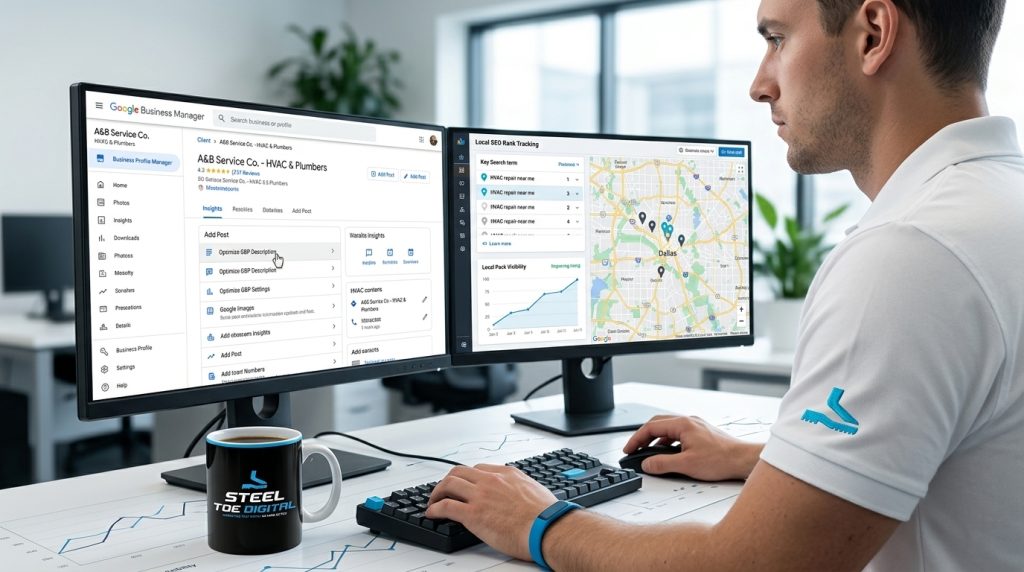
Getting there takes 3-6 months of consistent work: optimizing your Google Business Profile, collecting reviews, and building your local citation footprint. It’s not fast, but once you rank, the leads are essentially free.
For a full breakdown of how SEO works for inspectors, read our guide to SEO for home inspectors.
3. Online Booking Platforms
Spectora and ISN (Inspection Support Network) both have built-in marketplace features that let buyers find inspectors directly through the platform. If you already use one of these for scheduling, your profile is likely already visible. Make sure it’s complete: services listed, photos added, reviews showing.
Angi and HomeAdvisor generate leads too. Cost per lead runs $40-$100 depending on your market, and those leads are typically shared with other inspectors at the same time. You’re not the only call they’re making. Close rates are lower than Realtor or direct search leads, but they fill gaps during slow periods.
4. Google Local Services Ads (LSAs)
LSAs put a Google Guaranteed badge next to your name at the top of search results. For a first-time buyer searching for a home inspector, that badge matters. It signals you’ve been background-checked and vetted by Google.
Most home inspection markets cost $30-$80 per lead through LSAs. You pay per call, not per click. If the call isn’t a real lead (wrong number, spam), you can dispute it and get credited.
Budget for most markets: $300-$800 per month to keep a steady flow of calls. In smaller markets, you can start at $150-$200 and scale up once you see results.
For a deeper look at paid search, see our guide to Google Ads for home inspectors.
5. InterNACHI and ASHI Inspector Locator
Buyers who land on InterNACHI.org or ASHIfindinspector.com are actively searching for a credentialed inspector. These are high-intent leads. They already know they want a certified professional.
Your profile on these directories should be complete: current certifications, service area, phone number, website link, and reviews where the platform allows them. An incomplete profile loses to a complete one every time.
This is a free lead source that most inspectors set up once and forget. Revisit yours twice a year. If your certifications have changed or your service area has expanded, update the profile.
6. Zillow and Trulia
Some buyers find inspectors directly through real estate listing platforms. Zillow has a local services section where inspectors can create profiles. It’s not a primary lead source for most markets, but it’s free to set up and captures buyers who are already in purchase mode.
Keep your profile accurate. If your phone number or service area is outdated, fix it. A wrong number on a Zillow profile is a lead that went to voicemail and never called back.
7. Content Marketing
Blog content captures buyers in the research phase, before they’ve chosen an agent and before they’ve started scheduling inspections.
Posts that rank well for home inspectors:
- “Home inspection checklist for buyers”
- “What does a home inspector look for?”
- “First-time homebuyer home inspection guide”
- “How long does a home inspection take?”
Each of these answers a question a real buyer types into Google. If your site answers it better than anyone else, you get the traffic and the trust that comes with it.
This channel takes 6-12 months to build. But a post that ranks drives leads every month without additional spend. For the full picture on marketing strategy, see our guide to home inspection marketing.
8. Pre-Listing Inspections
Pre-listing inspections are growing. More sellers are paying for an inspection before they list to avoid surprises in the buyer’s inspection period. It keeps deals from falling apart and gives the seller a cleaner negotiation.
This is an underserved lead source for most inspectors.
The pitch to listing agents: “A pre-listing inspection means your sellers know what they’re dealing with before a buyer’s inspector finds it. Fewer post-inspection repair negotiations. Deals that close cleaner.”
Target listing agents specifically with this message. They’re different from buyer’s agents and respond to a different value proposition.
9. Builder Partnerships
New construction inspections run outside the resale market entirely. Phase inspections, pre-drywall walkthroughs, and final walkthroughs for new builds are recurring work. A relationship with one active builder can produce 10-20 inspections a year.
Builders want inspectors who understand construction sequence and can deliver reports fast. If you have new construction experience, lead with it.
This is relationship-driven work like Realtor referrals, but it diversifies your revenue away from the resale cycle. When resale volume drops because rates go up, new construction often keeps moving.
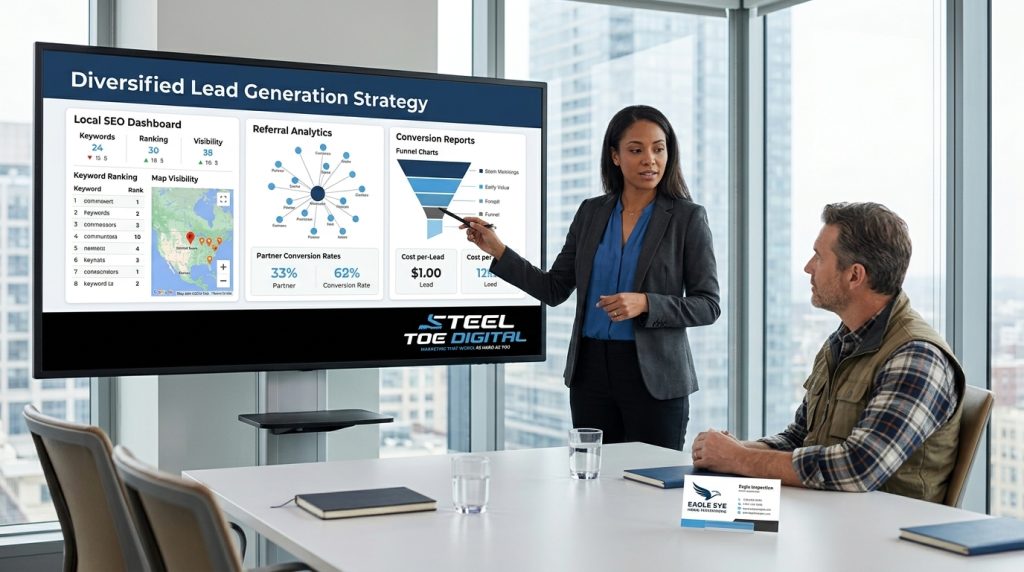
Comparing Home Inspection Lead Sources by Cost and Quality
| Source | Avg. Cost Per Lead | Lead Quality | Reliability |
|---|---|---|---|
| Realtor referral | $0 | Very high | Depends on relationship |
| Google Local SEO | $15-$40 | High | High once ranked |
| LSAs (Google Guaranteed) | $30-$80 | High | Consistent with budget |
| Angi / HomeAdvisor | $40-$100 | Medium | Consistent |
| InterNACHI / ASHI directory | $0 | High | Passive |
| Content marketing | $10-$30 | Medium-high | Builds over time |
| Pre-listing / builder | $0 | High | Relationship-dependent |
A few things to know about this table.
“Cost per lead” for SEO and content marketing is calculated by dividing your monthly marketing investment by the leads generated. It goes down over time as the channel matures. Angi’s cost stays flat or climbs.
“Reliability” tells you how much control you have. Realtor referrals are high quality but relationship-dependent: one retired agent changes your month. SEO is more reliable because it doesn’t depend on any one person.
The inspectors who grow past $300K-$400K in annual revenue almost always have 3-4 of these channels running simultaneously. Not all of them. Three or four. The mix depends on your market and your starting position.
What Most Inspectors Get Wrong About Lead Generation
The biggest mistake is treating Realtor relationships as a complete strategy.
Realtor referrals are great. They should be part of your pipeline. But the real estate market has cycles. When rates spike and transaction volume drops 30%, every inspector who is 100% dependent on agent referrals feels it immediately.
The inspectors who held their revenue in 2023 and 2024, when existing home sales hit 30-year lows, were the ones with Google rankings, LSAs running, and a content library generating passive traffic. They didn’t replace Realtor referrals. They added channels that didn’t depend on transaction volume.
The second mistake is spending money on lead generation before fixing the conversion piece. If your website looks like it was built in 2014, if you take 3 hours to respond to a request, or if you don’t have any Google reviews, you’re buying traffic that bounces. Fix the foundation first.
For a look at what a high-converting inspection website needs, see our guide to home inspector website design.
FAQ
How much do home inspection leads cost?
It depends on the source. Google Local Services Ads average $30-$80 per lead in most markets. Angi and HomeAdvisor run $40-$100, and those leads are typically shared with competitors. SEO and content marketing produce leads for $10-$40 once the channel is mature, though it takes 3-6 months to see consistent results.
How do home inspectors get more clients?
Start with your current Realtor network and expand it deliberately: attend office meetings, follow up after inspections, and ask for introductions to agents you don’t know yet. Pair that with Google Local SEO and LSAs to capture buyers searching directly. Those two channels together cover the majority of where home inspection bookings actually come from.
Is Angi worth it for home inspectors?
It depends on your market and your ability to respond fast. Angi leads are shared with other inspectors at the same time, so speed matters. If you can respond within 5 minutes and your rates are competitive, Angi can fill gaps in a slow week. It’s not a long-term strategy, but it’s not worthless either. Treat it as a fill-in source, not a foundation.
How do I get more Realtor referrals as a home inspector?
Show up in person. Attend real estate office meetings and offer to do a lunch-and-learn on what you look for during an inspection. Make your reports fast, readable, and professional. Follow up with agents after every inspection to ask how the transaction went. Agents refer inspectors who make their deals easier to close. Be consistent and easy to work with.
What’s the best home inspection lead source for a new inspector?
Start with InterNACHI and ASHI directory listings, which are free and attract high-intent buyers. Run Google LSAs at a modest budget ($200-$300/month) to get calls while you build reviews. Use those early jobs to collect Google reviews aggressively. Once you have 15-20 reviews and some website content, your organic rankings start to build. That’s the sequence that gets a new inspector to a full calendar fastest.

A Full Calendar From More Than One Source
If your inspection business runs on one or two agent relationships right now, you already know what happens when the market shifts.
SteelToe Digital builds marketing systems for home inspectors who want to fill their calendar from search, not just referrals. We handle Google SEO, Local Services Ads, and website conversion so your pipeline doesn’t depend on any one person’s activity.
Get a Free Strategy Call
No pitch. No contract. Just a look at where your leads are coming from and where the gaps are.