
Septic leads don’t work like plumbing leads. Nobody calls you because they want to. They call because they have to: the tank is backing up, the home inspection flagged the system, or they just bought a house and have no idea what’s underneath the yard.
That timing matters. The septic companies winning in 2026 are the ones positioned to be found the moment that urgency hits. This post covers the 8 best lead sources for septic companies, what each one costs, and which ones build long-term pipeline versus just filling next week’s schedule.
The 8 Best Sources for Septic Leads
Not all lead sources are created equal. Some generate calls today. Some build a machine that runs for years. Most septic companies run on referrals and one or two scattered tactics, and they wonder why the schedule gets unpredictable.
Here’s the full picture.
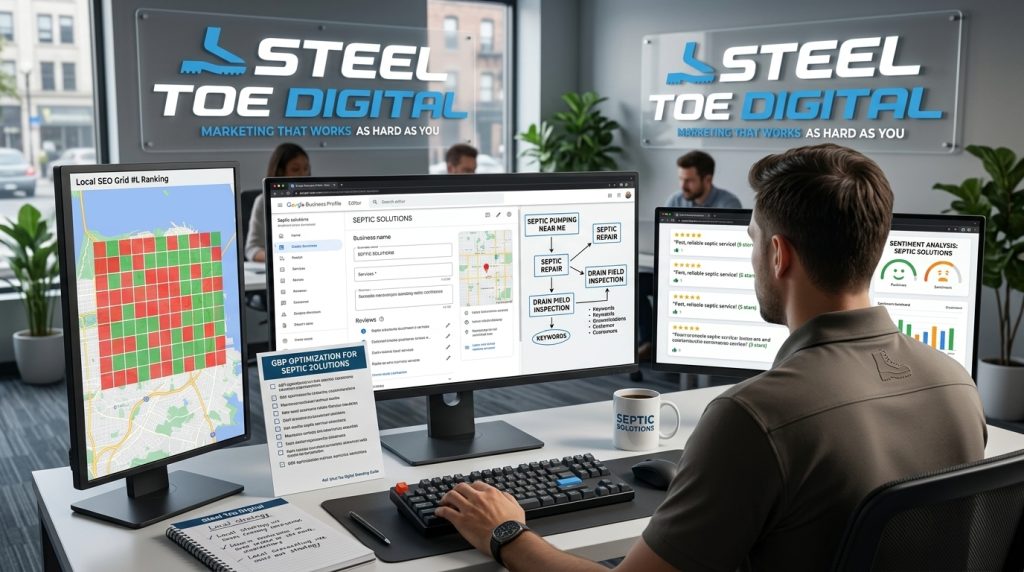
1. Google Maps (Local SEO)
This is the highest-ROI lead source for a septic company, and most operators underestimate how achievable it is.
When someone types “septic pumping near me” or “septic inspection [city]” into Google, the first thing they see is the Maps 3-pack. Three companies. A phone number. Reviews. That’s where the calls go.
Septic is still a low-competition SEO market in most areas. A plumber competing in a major metro is fighting 300 other optimized profiles. A septic company in a suburban or rural county is often fighting 5 to 10. The barrier to ranking is lower than you think.
What it takes to rank: a complete and accurate Google Business Profile, consistent review generation, and a website with location-specific pages. Results in most markets come in 3-6 months with consistent effort.
The best part: once you rank, the leads are free. No cost per click, no cost per lead. The phone rings because you did the work once. See our full guide to septic company SEO for the step-by-step.
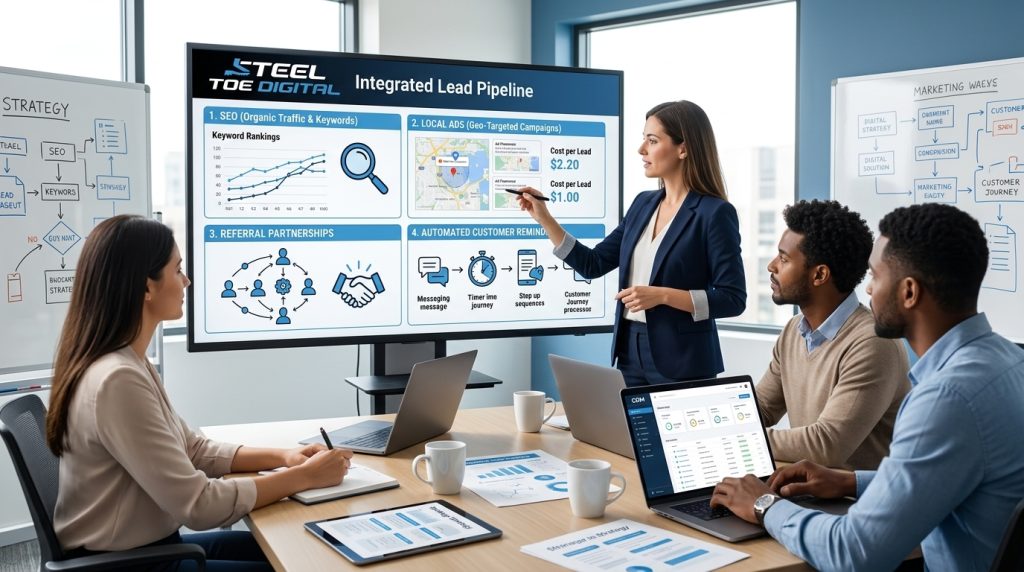
2. Google Local Services Ads (LSAs)
LSAs sit above the regular paid search results. You get the Google Guaranteed badge, which shows the customer that Google has vetted your business. You pay per lead, not per click.
Septic LSAs cost less than plumbing LSAs in most markets. Typical cost per lead runs $25-$60 depending on your location and the type of job. A $500/month budget can generate 8-20 leads in many septic markets, especially outside major metros.
The verification process takes 2-4 weeks: background check, license upload, and insurance documentation. Plan ahead before you need the volume.
LSAs also reward responsiveness. If you don’t pick up or respond to leads fast, Google deprioritizes your profile. Whoever answers the phone first usually books the job.
For a deeper look at how to set these up profitably, read our guide to Google Ads for septic companies.
3. Direct Mail to New Homeowners
New homeowners who just moved onto a property with a septic system are one of the best audiences in this business. They don’t know the history of the tank. They may have never owned a septic system before. And they’re making a dozen decisions about service providers right now.
You can buy new homeowner mailing lists filtered by county and property type from sources like Melissa Data or your county deed records. The message is simple: “New to the area with a septic system? Here’s what you need to know and how to get your first inspection scheduled.”
A postcard campaign targeting 500-1,000 new movers per month can produce consistent calls at a cost per lead of $15-$40 depending on your market and offer. This is one of the few septic lead sources where you control who sees the message.
4. Annual Service Database
If you’ve been in business for more than a few years, you already have a list of past customers. Most septic companies pump the same tank every 3-5 years. That’s a predictable return visit.
Build a database that tracks every customer’s last service date and their tank size. Set up automated email or text reminders when they’re approaching the recommended service interval. This isn’t a new lead. But it fills the schedule with people who already trust you and cost you nothing to reach.
A customer who gets a reminder text from you in April books before they have a problem. A customer who doesn’t gets a backed-up system in August and calls whoever shows up first on Google.
The math: if you have 400 past customers and 30% book a service reminder each year, that’s 120 booked jobs at zero acquisition cost. At a $350 average ticket, that’s $42,000 in recurring revenue before you run a single ad.
5. Realtor Referral Network
Every real estate transaction involving a home with a septic system requires an inspection before closing. That inspection has to be done by someone. It might as well be you.
Build relationships with 10-20 active Realtors in your market. Find them through your local real estate association, Zillow agent directories, or by asking your best customers who sold them their home.
What you’re offering is reliability. Realtors need inspections done fast, documented properly, and reported clearly. If you can turn around a report in 24 hours and show up when you say you will, you become the person every Realtor in your county calls. That’s a referral machine that runs itself.
Offer priority scheduling for Realtor-referred clients. One Realtor who closes 40 transactions a year on septic-served properties can send you 30+ leads annually.

6. Home Inspector Referrals
Home inspectors look at the surface signs of a septic system during a general inspection, but they don’t pump tanks or scope lines. When they flag a concern, they refer the buyer to a septic specialist.
Get in front of every home inspector operating in your county. A box of business cards and a one-page referral sheet is enough. If you can make their job easier by providing a clean, professional report they can attach to their own documentation, you’ll stay at the top of their referral list.
This channel takes a few months to build but produces some of the highest-quality leads in the business. These clients already know they have a problem. They’re ready to book.
7. County Health Department Lists
Many counties maintain a list of licensed or approved septic contractors. Some post these lists publicly on their health department websites. When a homeowner is required to get a system inspected or repaired under a health department order, they often start with that list.
Call your county health department and ask how to get on the approved contractor list. Ask whether they refer residents to licensed contractors. The process varies by county, but in most markets, this channel is free, underused, and generates motivated buyers.
8. Angi and HomeAdvisor
These platforms are expensive and imperfect. You already know this if you’ve used them.
Septic leads on Angi typically run $40-$100 per lead, and the same lead is often sent to 3-5 competitors simultaneously. Whoever calls back first usually wins the job. Your close rate on shared leads is lower than on leads that come to you directly.
That said, Angi and similar platforms serve a purpose: they fill schedule gaps when your organic sources aren’t producing enough volume. Use them as a supplement, not a foundation. If Angi is your primary lead source, that’s the real problem to fix.
Read our breakdown of septic company marketing to see how these channels work together as a system.
What a Full Septic Lead System Looks Like
Most septic companies run on 1-2 of these channels. The companies with a full schedule year-round run all of them at some level.
The sequence that works in most markets:
First, get your Google Business Profile optimized and start generating reviews. This is the foundation. Without it, everything else is harder.
Second, build your annual service database and set up reminders. This produces revenue from customers you’ve already earned. It costs almost nothing.
Third, add LSAs or direct mail once the foundation is in place. These bring in net-new customers while your organic presence grows.
Fourth, build your Realtor and home inspector network. This takes 3-6 months but produces consistent, high-quality leads once it’s running.
Every week you don’t have these channels working together, someone else in your market is getting those calls. That’s not a future problem. That’s this week.
FAQ
How much do septic leads cost?
It depends on the source. Google organic leads cost nothing per call once you rank, but ranking takes 3-6 months of consistent work. LSA leads typically run $25-$60 per lead in most septic markets. Angi leads run $40-$100 but are shared with competitors. Direct mail to new homeowners typically produces leads at $15-$40 each depending on your offer and market.
How do I get more emergency septic calls?
Emergency calls go to whoever ranks first on Google Maps and has a visible phone number. A “24-hour septic service” keyword on your Google Business Profile and website pulls emergency searches. LSAs also surface for emergency intent. Response time is the other factor: if you call back within 5 minutes, you book significantly more emergency jobs than if you call back in an hour.
Is Angi worth it for a septic company?
It depends on your market and how fast your team responds to leads. In markets with low septic competition, Angi leads can be profitable. In dense metro areas, the cost per lead is high and close rates are low. Most septic companies find Angi works as a gap-filler, not a primary source. If you’re spending more than 20% of your marketing budget on Angi, that’s probably too much.
How long does it take to build a steady pipeline of septic leads?
Realistically, 6-12 months to have multiple channels producing consistently. Google Maps takes 3-6 months with proper optimization and review generation. A Realtor referral network takes 3-6 months to mature. LSAs can produce leads within 2-4 weeks of setup. Direct mail starts working within 30-60 days. Stack them in that order and you’ll have a full calendar by month 9-12.
Do I need a website to get septic leads?
You need one to rank on Google and run effective LSAs. Your Google Business Profile alone can generate some calls, but a website with septic-specific service pages and local city pages dramatically increases your search visibility. See our guide to septic company website design for what those pages need to include.
Stop Waiting for the Phone to Ring
If your schedule depends on word of mouth and hoping someone finds you, the slow months are going to keep being slow.
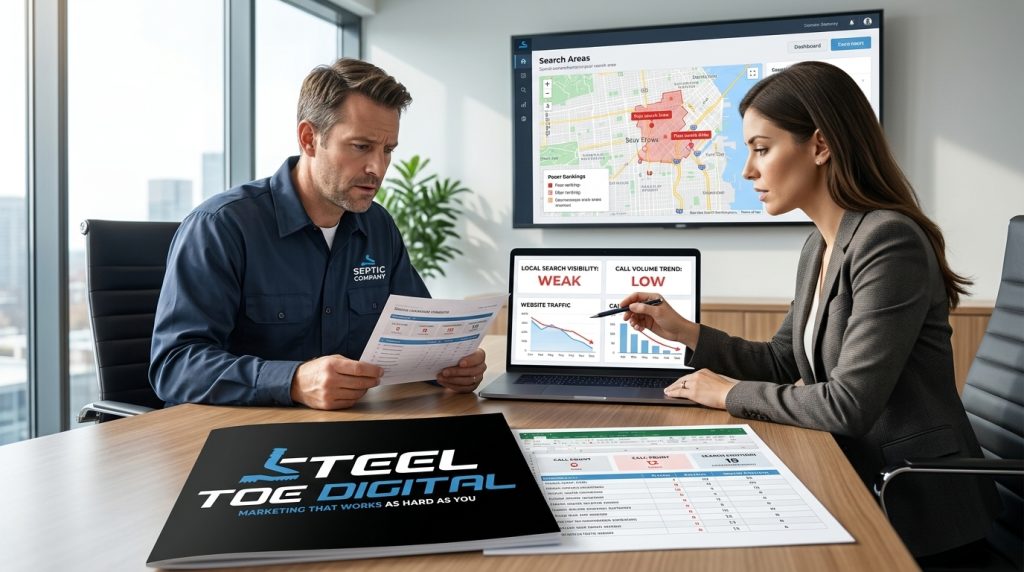
SteelToe Digital builds marketing systems for septic companies that want more inbound calls, a full service database, and a lead pipeline that doesn’t dry up when referrals slow down. We know the septic business from the inside out. We know what it takes to fill a schedule.
Get a Free Lead Audit
No pitch. No contract. Just a look at where your leads are coming from now and where they should be coming from.