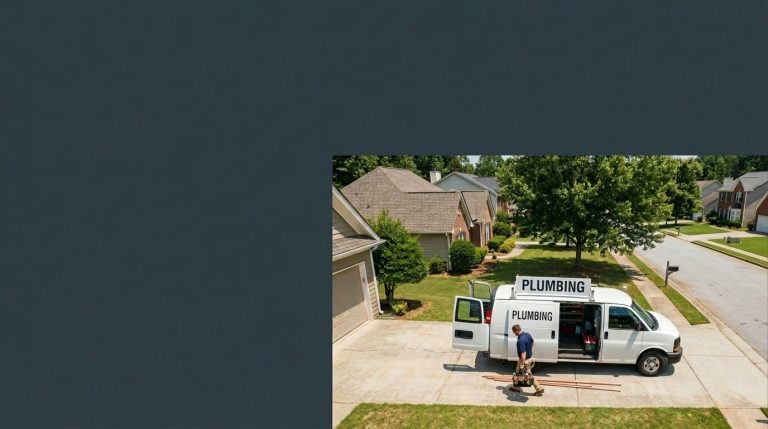
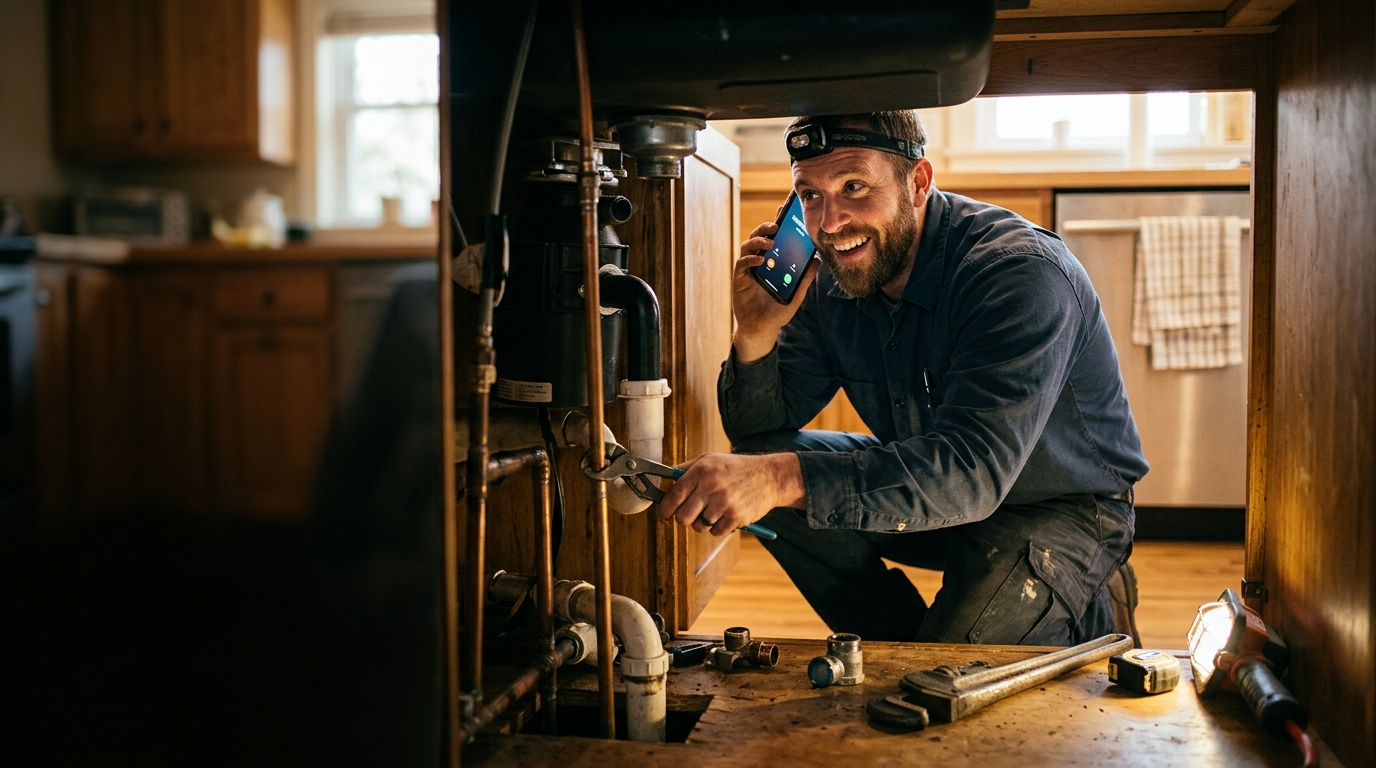
Right now, someone in your city is searching “plumber near me.” The question is whether you’re showing up or watching that job go to the guy with half your reputation.
Plumbing is one of the highest-intent search categories on Google. When someone’s toilet is overflowing at 9pm, they are not scrolling Facebook or asking a neighbor. They are typing “emergency plumber” into their phone and calling whoever shows up first. That’s the game. Either you’re in the top 3 results or you’re not getting that call.
This guide covers exactly what plumber SEO involves, how it works, and what it takes to own your local market. If you’re tired of paying $80-$200 per lead for calls that go to 4 other plumbers at the same time, this is the alternative.
Why SEO Is the Most Valuable Marketing Channel for Plumbers
You’ve been pitched on everything: Angi, HomeAdvisor, Google Ads, Facebook, direct mail. Most of it works the same way. You pay every time someone reaches out, whether they book or not.
SEO works differently. You build authority in Google’s eyes over time, and then the calls come without a cost per lead attached. A well-ranked plumbing website gets calls all day, every day, without you writing a check every time someone clicks.
The math on SEO leads vs. paid leads matters here. The average plumber on Angi pays $60-$150 per shared lead, meaning that same lead was sold to 3-5 competitors at the same time. A Google Ads campaign for competitive plumbing keywords runs $20-$60 per click, and not every click calls. Organic SEO leads, once the ranking is established, come in at a fraction of that cost. The investment is front-loaded. The return compounds.
There is one honest caveat: SEO takes time. Anyone who tells you they can get you to page 1 in 30 days is lying to you or selling you something that will eventually get your site penalized. The real timeline is 3-12 months depending on your market, your starting baseline, and the competition you’re up against. But the companies that put in that work are the ones whose phones ring on a Tuesday morning without them spending a dollar.
For a broader look at how this fits into your overall strategy, see our plumber marketing guide.
The Two Types of Plumber SEO You Need to Win
Most people think of SEO as one thing. For plumbers, it’s two separate battles, and you need to win both.
The Google Maps 3-pack is the map with three listings that shows up at the top of results when someone searches “plumber near me” or “plumber [your city].” These three spots get the majority of clicks on any local search. Getting into the 3-pack depends primarily on your Google Business Profile, your reviews, and how well Google trusts your business location.
Organic search results are the traditional blue links below the Maps pack. These rankings depend on your website: how it’s built, what pages you have, how fast it loads, and how much content you’ve published. A plumbing company that ranks in both the Maps pack and the organic results below it captures dramatically more clicks than one that shows up in only one place.
These two systems feed each other. A strong website with good local content helps your Google Business Profile rank. A well-maintained GBP signals to Google that your business is real, active, and trusted, which helps your website. You cannot do one without the other and expect full results.

Step 1: Master Your Google Business Profile
Your Google Business Profile (GBP) is the most important single asset in local plumber SEO. It controls whether you show up in the Maps 3-pack. Most plumbing companies set it up once and forget it. That’s a mistake.
Category: Set your primary category to “Plumber.” Do not use “Plumbing contractor” or “Home services.” The exact category match matters.
Service area: List every city, suburb, and zip code you actually serve. Google uses this to determine relevance when someone searches from a different part of your market. If you serve 12 towns but only listed your home city, you’re invisible in 11 of them.
Services: Add individual services, not just a general description. Drain cleaning, water heater installation, sewer line repair, emergency plumbing, repiping, fixture installation. Each service listed is another signal to Google about what you do and where you do it.
Photos: Aim for 20 or more. Trucks with your logo, crew in the field, before-and-after shots on completed jobs, your shop or office. Profiles with more photos get more views. This is documented by Google directly. Stock photos do nothing.
Posts: Publish 1-2 posts per week on your GBP. A seasonal offer, a service tip for homeowners, a reminder about sump pump checks before heavy rain season. Google Posts keep your profile active, which is a relevance signal.
Reviews: We’ll cover this in detail in Step 3, but review count and recency directly affect your Maps ranking. Your GBP is where they live.
For a complete breakdown of what a strong plumbing company web presence looks like, see our plumber website design guide.
Step 2: Build a Website Google Can Actually Rank
The single most common SEO problem I see with plumbing websites is that everything lives on one page. A “Services” page with a bulleted list of everything the company does. One page. No detail. No depth. That’s not how Google works.
Google ranks pages, not websites. If you want to rank for “drain cleaning [city]” and “water heater installation [city]” and “sewer line repair [city],” you need separate pages built around each one. This is not negotiable.
Build individual service pages. Each page should be focused on one service, explain what the job involves, what it costs in general terms, when someone needs it, and include your city naturally in the content. The URL should match:
- /drain-cleaning/
- /water-heater-installation/
- /emergency-plumbing/
- /sewer-line-repair/
- /repiping/
Build individual city pages. If you serve multiple cities or towns, each one deserves its own page. Not a template with the city name swapped in. Actual content: neighborhoods you serve in that area, common plumbing issues in older housing stock there, local contact info. Google is very good at identifying city pages that are just duplicated templates. Those pages do not rank.
Speed matters. Your site needs to load in under 3 seconds on mobile. Mike is reading this on a phone he’s had for two years on a spotty 4G connection in a driveway. If your site takes 6 seconds to load, the customer is already calling someone else. Run your site through Google’s PageSpeed Insights. If it scores below 70 on mobile, you have a problem.
Schema markup. This is code that tells Google exactly what your business is and where it operates. LocalBusiness schema, Plumber schema, and FAQPage schema on relevant pages. It’s technical work, but it makes your listings more prominent in search results.
NAP consistency. Your business name, address, and phone number must be identical on your website, your GBP, and every directory listing. “ABC Plumbing LLC” on your website and “ABC Plumbing” on Yelp is a mismatch that creates confusion for Google. Exact match, everywhere, every time.

Step 3: Get Reviews Systematically
Plumbing is a trust business. Someone is letting you into their home, often during a stressful situation. Before they call, most people check Google reviews. And your reviews are also one of the primary factors Google uses to decide who shows up in the Maps 3-pack.
The companies dominating local plumbing search in most markets have 200+ reviews and a 4.7 or higher rating. That did not happen by accident. It happened because they have a process.
The process is simple: After every completed job, send the customer a text with a direct link to your Google review page. Not a link to your website. Not an email asking them to “consider leaving feedback.” A text with a direct link that takes them straight to the review box on Google. That single change typically doubles the rate at which completed jobs turn into reviews.
Target 5 or more new reviews per month. Review velocity, meaning how recently you’re getting reviews, matters as much to Google as your total count. A company with 400 reviews and none in the last 6 months is less relevant in the algorithm than a company with 150 reviews and 10 in the last 30 days.
Respond to every review within 48 hours. Both positive and negative. A response to a negative review that is calm, professional, and solution-oriented actually builds trust with people reading it. It shows you take the work seriously.
For a detailed look at how reviews fit into your overall plumbing marketing approach, see our plumbing company reviews guide.
Step 4: Create Content That Captures Long-Tail Search Traffic
Your service pages get you ranked for people ready to call a plumber today. Content gets you in front of people at every earlier stage of the process, and some of those people convert.
Long-tail plumbing searches are specific, lower-competition, and often very high intent. Someone searching “how much does it cost to repipe a house in [your city]” is not casually browsing. They have a problem and they’re figuring out what to do about it. If your blog post is the first result they click, you’re now the expert in their mind before they’ve called anyone.
The types of content that drive plumbing traffic:
- “How much does drain cleaning cost in [city]?” (pricing questions drive serious searchers)
- “Why is my water heater making a popping sound?” (diagnostic questions capture DIY-curious customers who end up calling)
- “Signs you need a sewer line replacement” (symptom-based searches often come from homeowners who know something is wrong)
- “Emergency plumber [city]: what to do while you wait” (high-intent, time-sensitive)
- “How long does a water heater last?” (early-stage research that positions you for the replacement job)
Publish at minimum 2 posts per month. Each one should link back to the relevant service page on your site. If the post is about water heater sounds, it should link to your water heater installation page. That internal link structure tells Google what your site is about and distributes ranking authority across your pages.
For pricing content specifically, see our how much does a plumber cost guide for an example of how this type of content is built to rank and convert.
Step 5: Build Local Citations That Confirm Your Business Is Real
A citation is any online mention of your business name, address, and phone number. Google uses citations as a signal that your business actually exists and operates where you say it does. More citations from credible sources, all consistent with each other, improve your local ranking.
The top plumbing directories to be listed in:
- Google Business Profile (already covered, it’s the most important)
- Yelp
- Angi (formerly Angie’s List)
- HomeAdvisor
- BBB (Better Business Bureau)
- Houzz
- Thumbtack
- PHCC.org (the Plumbing-Heating-Cooling Contractors Association directory)
- Facebook Business Page
- Apple Maps
Each one should show your exact business name, address, and phone number. Run an audit with a tool like BrightLocal or Whitespark to find inconsistencies and missing listings. Inconsistent NAP data across directories creates conflicting signals for Google. That confusion costs you ranking.
This is not the most exciting part of SEO. It is also not optional if you want to win local search in a competitive market.

How Long Does Plumber SEO Actually Take?
Here’s the honest answer most agencies won’t give you.
Your Google Business Profile responds fastest. If it’s been neglected, filling it out completely, adding photos, and publishing posts regularly can move your Maps ranking within 30-60 days in lower-competition markets. In dense urban markets, it takes longer because every other plumber is doing the same work.
Website improvements on an existing site take 3-6 months to show meaningful organic ranking movement. Google needs to crawl the updated pages, index them, and evaluate them against the competition before your position changes.
A brand new website starting from scratch takes 6-12 months to reach page 1 for competitive terms in most markets. New domains have no history. Google takes time to trust them. Anyone who tells you otherwise is not being straight with you.
The companies that start SEO and stick with it for 12 months see compounding returns. Reviews build. Content accumulates. Backlinks come in. The same monthly budget produces more results in month 12 than it did in month 3, because the foundation is stronger. The companies that stop at month 4 because “it’s not working yet” hand those rankings to whoever keeps going.
For a comparison of how SEO timelines compare to paid advertising for plumbers, see our Google Ads for plumbers guide.
Plumber SEO Mistakes That Keep You Off Page 1
Most of the plumbing companies I talk to have one or more of these problems already. If any of these sound familiar, they’re the reason a competitor with less actual skill than you is outranking you.
Duplicate city pages. You created a “plumber in Atlanta” page and a “plumber in Marietta” page, but the content is word-for-word identical except for the city name. Google identifies this as thin, duplicate content. Those pages do not rank. You need real, distinct content on each city page.
All services on one page. If someone searches “water heater installation near me,” Google wants to send them to a page specifically about water heater installation. A page titled “Our Services” with a bullet list of everything you do is not that page.
Ignoring your Google Business Profile. Setting it up in 2019 and never touching it is almost as bad as not having one. GBP profiles that are active, regularly updated, and regularly adding new reviews rank above stale ones. Google measures this.
Not asking for reviews. The single highest-return, lowest-cost action in plumber SEO is texting every completed customer a direct review link. It costs nothing but the time to set up a system. Most plumbing companies still rely on customers to volunteer reviews on their own. They don’t.
Thin blog content. Publishing 300-word posts with generic titles does not build ranking. A post titled “Plumbing Tips” with 4 bullet points ranks for nothing. If you’re going to publish content, it needs to be specific, complete, and actually useful to the person searching.
What Plumber SEO Costs
Plumber SEO is not free. It either costs you time or it costs you money. The companies doing it themselves are spending 5-10 hours per month minimum on content, reviews, GBP management, and technical maintenance. Most plumbing business owners at the $1M+ level do not have that time.
Hiring an agency runs $800-$2,500 per month for a competent plumber SEO engagement. That range depends on your market size, how competitive it is, how much content is required, and whether technical website work is included. Markets like Chicago, Houston, or Phoenix will cost more than a market with one mid-sized city and modest competition.
Avoid agencies that price plumber SEO below $600/month and promise fast results. At that price point, you are getting templated work, generic content, and minimal actual attention. That’s the category of agency that gets plumbers to page 1 in the wrong city, charges $1,500/month for six months, and disappears when results don’t materialize.
What you should expect from a real SEO partner: a clear audit of where you stand now, a roadmap with realistic timelines, monthly reporting you can actually understand, and someone who picks up the phone when you call.
For a broader look at how plumber SEO fits within your total marketing approach, see our local SEO for plumbers guide.
Frequently Asked Questions
How much does plumber SEO cost?
Plumber SEO typically runs $800-$2,500 per month through an agency, depending on your market size and competition level. Highly competitive markets like major metros cost more. You can do some of it yourself, but the time cost is real: figure 5-10 hours per month minimum for effective self-managed SEO work.
Can I do plumber SEO myself?
Yes, for some of it. GBP optimization, review generation, and basic content publishing are manageable without an agency. Technical website work, schema markup, and city page builds usually require someone with development skills. If you’re at $500K or under, doing it yourself makes sense. Above that, your time is worth more per hour than the cost of delegating it.
What keywords should a plumbing company target?
Start with your core services plus your city: “plumber [city],” “drain cleaning [city],” “water heater installation [city],” “emergency plumber [city].” Then build out long-tail content around the questions your customers actually ask before calling you. Diagnostic questions, cost questions, and timeline questions all drive traffic that converts.
How do I get my plumbing company to show up on Google Maps?
Three things drive Maps rankings: a complete and active Google Business Profile, a steady flow of recent Google reviews, and consistent NAP (name, address, phone) information across all directories. Companies that do all three consistently move into the 3-pack in 2-6 months depending on the competition in their market.
What’s the difference between Google Maps SEO and regular SEO?
Google Maps rankings (the 3-pack) are driven primarily by your GBP, your reviews, and your proximity to the searcher. Organic (website) rankings are driven by your website content, page structure, speed, and backlinks. Both matter for plumbers. The Maps 3-pack captures the most clicks on local searches. Organic results catch the people who scroll past the map.
Ready to Own Page 1 in Your Market?
Most plumbing companies are one system away from getting off the per-lead treadmill. The work is not mysterious. It’s GBP, reviews, a properly built website, and content that matches what people are actually searching. Done consistently, it compounds. Done once and abandoned, it fades.
SteelToe Digital builds SEO systems for plumbing companies that want more calls without paying per lead. We’ve been inside the trades long enough to know what a real plumbing company’s day looks like, and we build marketing around that, not around what looks good in a quarterly report.
Let’s pull up your current rankings and show you exactly where you stand.
No pitch. No contract. Just a straight look at your numbers.