
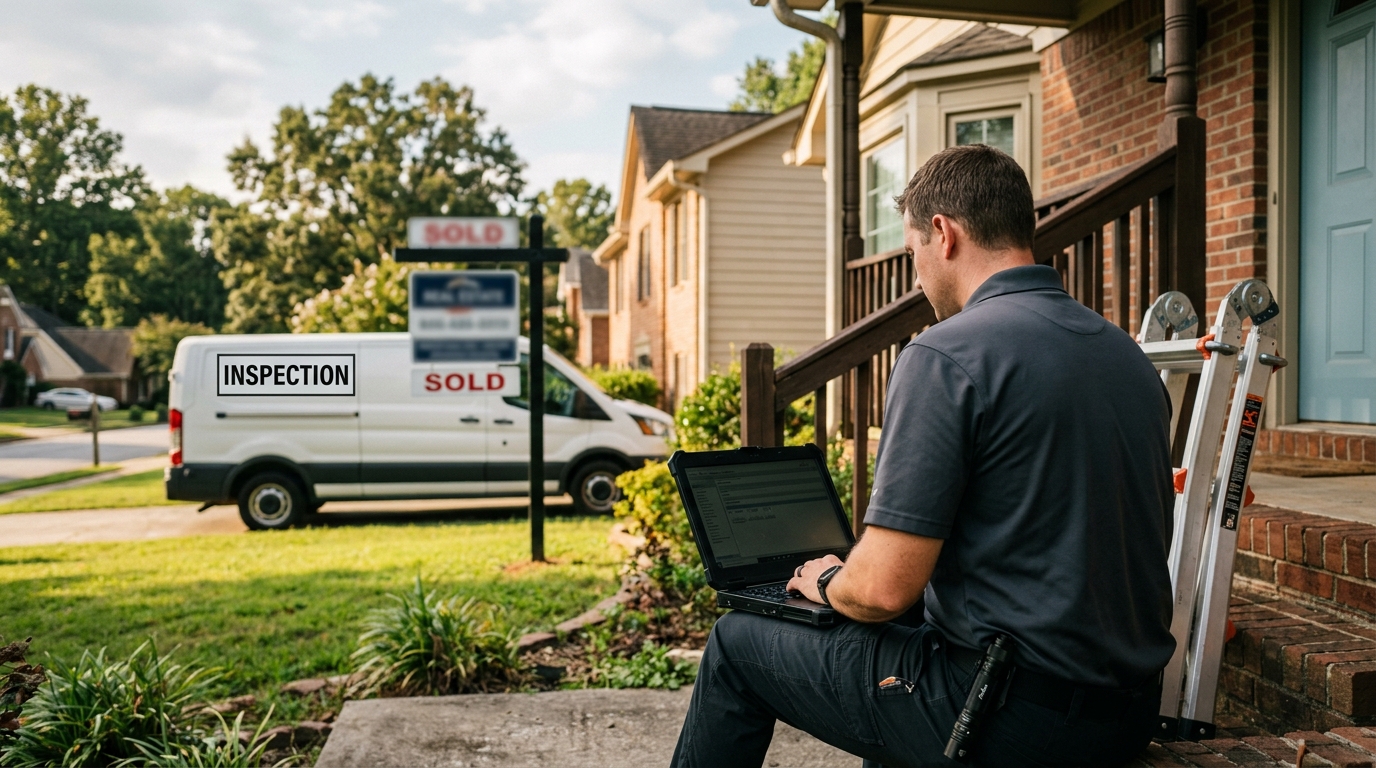
Right now, a homebuyer in your market is typing “home inspector near me” into Google. The inspector who shows up is getting that call. The inspector who doesn’t is waiting for a Realtor to remember their name.
Most home inspectors built their business on referrals. That model works until a Realtor retires, switches brokerages, or starts recommending someone else. SEO is what happens when you stop waiting for the phone to ring and start making it ring yourself.
This guide covers what home inspector SEO actually involves: your Google Business Profile, your website, your reviews, local citations, and the content that gets you found when buyers go looking on their own.
Why Home Inspector SEO Is Easier Than You Think
Most home inspectors have a weak online presence. That sounds like bad news. It isn’t.
It means the bar to rank in your market is lower than almost any other home service trade. Plumbers compete against 50 other companies in Google Maps. Home inspectors in most markets are competing against 5-10, most of whom haven’t touched their Google profile in three years.
Buyer behavior is also shifting. More homebuyers are searching for inspectors directly instead of taking whoever their Realtor suggests. Some buyers want a second opinion. Some want someone without a Realtor relationship they might feel awkward about. Some just prefer to find their own people.
When they go to Google, you either show up or you don’t. And right now, most home inspectors don’t.

Google Business Profile: Your Most Important SEO Asset
Your Google Business Profile (GBP) is what gets you into the local 3-pack: the map results at the top of Google when someone searches “home inspector [city].” That 3-pack gets the most clicks. If you’re not in it, you’re invisible to most searchers.
Primary category: Home Inspector. Set this correctly and don’t change it.
Secondary categories: Add Building Inspector if you do commercial work. If you offer radon testing, add Radon Testing Service. Services like these matter because some buyers search specifically for them.
Services section: List everything you offer. Standard home inspection, radon testing, mold testing, sewer scope, thermal imaging, pre-listing inspection. The more complete this section is, the more searches your profile is eligible to appear in.
Photos: This matters more than most inspectors realize. Upload a professional headshot, photos of you on the job, your equipment, and screenshots of a sample report. Buyers are handing over $400-$600 for an inspection from someone they’ve never met. A profile with 30 real photos builds more trust than one with none.
GBP Posts: Post once or twice a month. Educational content works well here: “What I check during a roof inspection,” seasonal tips before winter, notes on what pre-listing inspections uncover. Posts keep your profile active and signal to Google that you’re operating.
Reviews: The Biggest Ranking Factor You Control
Google Maps rankings depend heavily on reviews. Not just the count. The recency, the consistency, and the average rating all matter.
For home inspectors, the target is 50 or more Google reviews at 4.8 stars or higher. That bar exists because buyers are review-sensitive about this service in a way they aren’t about getting a drain unclogged. They’re making a $450,000 decision based partly on your report. They want to know you’re thorough, that you communicate well, and that past clients trusted you.
The best time to ask for a review is immediately after report delivery. The client is engaged, the experience is fresh, and if the inspection went well, they’re usually happy to help. A simple text with a direct link to your Google review page converts far better than asking in person and hoping they remember.
Tools like NiceJob or Birdeye automate this process so you’re not manually following up with every client. Set it up once and it runs.
Beyond Google: keep your Zillow profile updated, maintain a Yelp listing, and keep your Facebook page active. Buyers cross-reference these. A strong Google rating reinforced by solid Zillow reviews reads as more credible than Google alone.
InterNACHI and ASHI member profiles also carry ratings and reviews. If you’re a member of either association, keep those profiles complete. Some buyers specifically filter for certified inspectors before they ever look at Google.
For a deeper look at how marketing channels stack up for inspection companies, read the home inspection marketing guide.
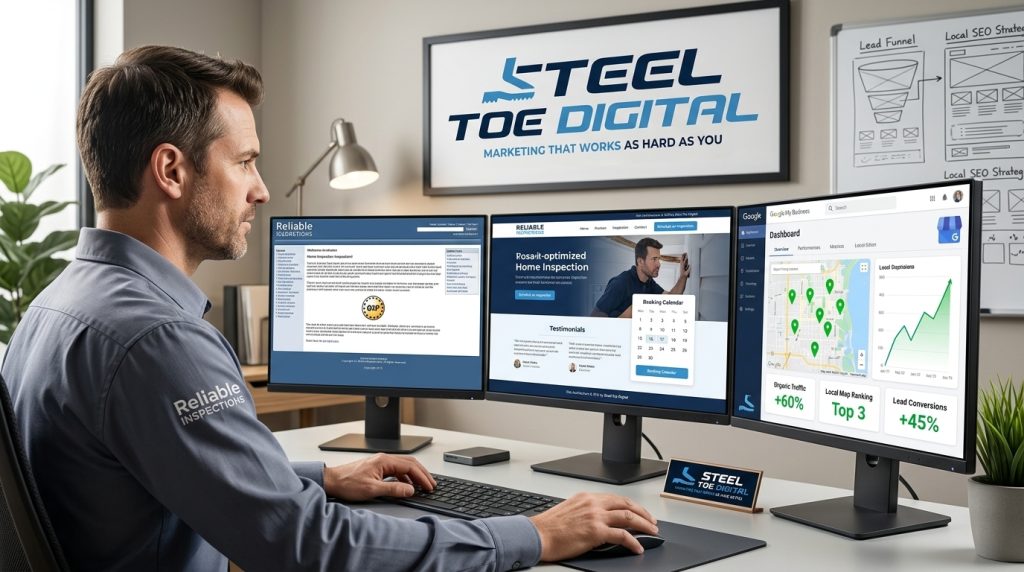
Building a Website That Actually Ranks
Most home inspector websites have one page. Maybe two. A brief description, a phone number, and a contact form that looks like it was built in 2013.
That’s not a website. That’s a digital business card that Google has no reason to rank.
A website that ranks has specific pages for specific searches. Here’s what that structure looks like:
Service pages: One page per service you offer. General home inspection. Radon testing. Mold testing. Sewer scope. Thermal imaging. Pre-listing inspection. Commercial inspection if you do it. Each page should explain what you do, what it costs (or a range), how long it takes, and what the client gets.
Location pages: One page per city or county you serve. “Home Inspector in [City Name]” as the H1. Local landmarks, neighborhoods you know, any market-specific notes. These are what get you found in searches outside your home base.
Sample report page: Most inspectors guard their report format like it’s proprietary. It isn’t, and showing it builds trust. Let buyers see exactly what they’re getting before they book. A well-formatted sample report page is a conversion tool as much as an SEO tool.
Online booking: This is the clearest differentiator most home inspectors ignore. A buyer who finds you at 10pm on a Wednesday wants to book, not wait until you open at 8am. If you have online scheduling and your competitors don’t, you win a percentage of those leads by default.
Schema markup: Add LocalBusiness schema, HomeInspector type where supported, and FAQPage schema on any page with FAQ content. This helps Google understand what you do and can get your FAQs pulled into search results directly.
For a detailed breakdown of what a high-performing inspection company website needs, see the guide to home inspector website design.
Content That Pulls in Buyers Before They’ve Chosen an Inspector
Service and location pages get you found by buyers who are ready to book. Content pages get you found by buyers who are still deciding.
That second group is large. Many buyers haven’t bought a home before. They’re searching questions, not service providers. If your content answers those questions, you get the traffic. And traffic from someone researching home inspections converts well once they’ve read enough to trust you.
The content topics that rank for home inspectors and actually convert:
“How much does a home inspection cost in [your city]?” This is searched constantly and most inspection websites don’t answer it. Write a page with current pricing in your market, what affects cost (square footage, age of the home, add-on services), and what buyers should expect to pay. You’ll rank for it and you’ll convert buyers who care about price.
“What does a home inspector look for?” Educational, high-traffic, and it lets you demonstrate competence before anyone calls you. Walk through the inspection categories: roof, foundation, HVAC, plumbing, electrical, attic, crawl space. Buyers who read this trust you more.
“Home inspection checklist for buyers” Searches well and positions you as a resource, not just a vendor.
“Home inspection vs. appraisal” This question gets asked constantly. Buyers confuse the two. Clear up the difference, briefly explain what you do, and you pick up traffic from a search that has purchase intent behind it.
“When should you get a pre-listing inspection?” Good for reaching sellers, not just buyers. Pre-listing inspections are a growing segment and most inspectors don’t market for them specifically.

Local Citations: Getting Listed Where Buyers Look
Citations are directory listings that confirm your business name, address, and phone number across the web. They’re not flashy, but they matter for local rankings and they matter for buyers who find you through channels other than Google.
The most important citation directories for home inspectors:
InterNACHI Inspector Locator (internachi.org): Buyers and Realtors both use this to find certified inspectors. If you’re a member, your profile needs to be complete with photos, services, and service area.
ASHI Find an Inspector (ashi.org): Same story. ASHI certification carries weight with buyers who have done any research. Keep the profile current.
Angi and HomeAdvisor: Leads from Angi come with the same problems they do for every other trade: shared leads sent to multiple inspectors, price shoppers, and inconsistent quality. Use them for citation value, not as a primary lead source.
Yelp, Thumbtack, and Google: Complete profiles with accurate information. Consistency matters. If your business name is listed differently across directories, it creates confusion for Google.
For inspectors who also offer mold testing, a complete Houzz listing helps, particularly for pre-listing work where the audience skews toward homeowners rather than first-time buyers.
How Long Home Inspector SEO Takes
This is where most agencies lie to you and most inspectors get burned.
Honest timeline: expect 3-6 months before you see meaningful movement in local rankings, assuming you’re executing consistently. In low-competition markets, that timeline can shorten to 2-3 months. In larger cities where several inspectors have already invested in SEO, 6-9 months is realistic.
The reason it takes time is that Google builds trust in businesses gradually. A new GBP with fresh reviews, consistent citations, and a better website isn’t going to outrank a competitor with 200 reviews and a 5-year-old domain overnight. But month by month, the gap closes.
The inspectors who get the best results from SEO are the ones who treat it like a system: get reviews every week, post to GBP monthly, build content regularly. The ones who try it for 60 days, see no results, and quit are the ones Google never rewards.
For context on what SEO timelines and execution look like across trades businesses, read the guide to contractor SEO.
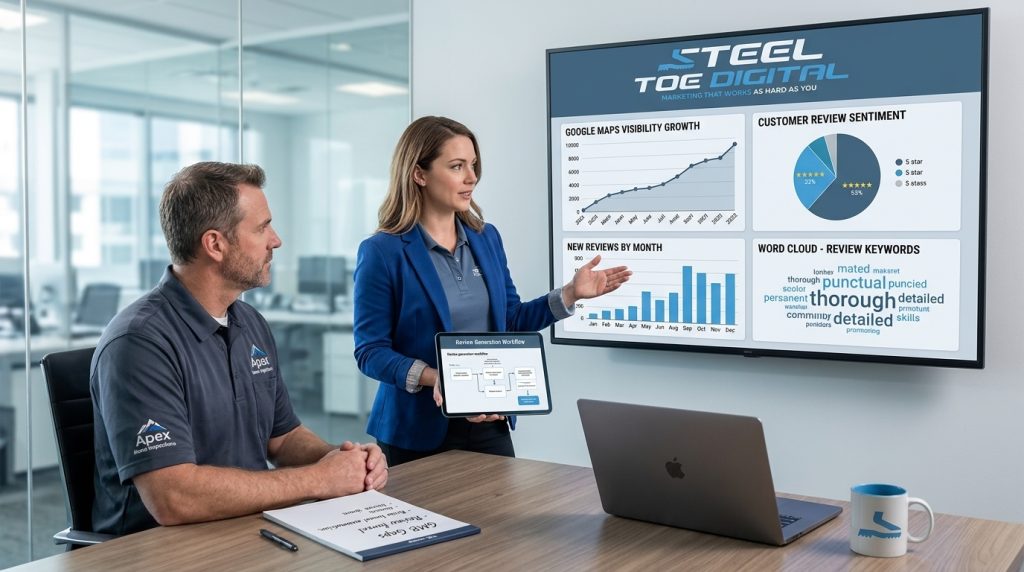
What Home Inspector SEO Actually Costs
Cost varies by market, what’s already in place, and what you’re trying to accomplish.
A basic setup, which includes GBP optimization, a website audit, citation cleanup, and a review generation system, typically runs $1,000-$2,500 as a one-time project.
Ongoing SEO, which includes monthly content, GBP management, review management, and link building, runs $800-$2,000 per month depending on market competitiveness and how much content you need.
The math on that investment: if a standard home inspection in your market is $400-$600 and you’re booking 15 more jobs per month through Google, that’s $6,000-$9,000 in additional monthly revenue from a channel that continues to build while you sleep. Most inspectors who get their GBP and website right see ROI within the first 3-4 months of meaningful execution.
Compare that to paying $40-$80 per shared Angi lead for buyers who are also getting called by three other inspectors at the same time. The math on owned search traffic is better.
FAQ
How do I get my home inspection business to rank on Google?
Start with your Google Business Profile. Set the primary category to Home Inspector, fill in every service you offer, add photos, and start generating reviews after every completed inspection. Once your GBP is solid, build out your website with individual service pages and location pages. That combination is what moves you into the Google Maps 3-pack in most markets.
What keywords should a home inspector target?
Your primary keywords are “home inspector [city]” and “home inspection [city].” Secondary keywords include “home inspector near me,” “radon testing [city],” “mold inspection [city],” and “pre-listing inspection [city].” Long-tail content keywords like “how much does a home inspection cost in [city]” generate traffic from buyers earlier in the decision process and convert well.
How long does home inspector SEO take?
Most home inspectors in low-to-medium competition markets see ranking improvements in 3-6 months with consistent execution. That means reviews coming in regularly, GBP activity monthly, and website content being added over time. In larger cities with established competitors, budget 6-9 months before you’re pulling consistent inbound leads from Google.
How much does SEO cost for a home inspection company?
One-time setup projects typically run $1,000-$2,500. Ongoing monthly SEO runs $800-$2,000 per month depending on your market and what the engagement includes. Most home inspectors see a clear return within 3-4 months once organic rankings start producing direct bookings, particularly when compared to pay-per-lead platforms where the same buyer is shared with multiple competitors.
Do I need a separate website page for each city I serve?
Yes. Google ranks pages, not websites. If you serve five cities and you have one homepage, you’re only eligible to rank in searches for your primary location. A dedicated page for each service area, with local content that’s specific to that city, gets you into rankings across your full territory. This is one of the highest-leverage moves a multi-area inspector can make.
Start Showing Up When Homebuyers Search for an Inspector
Your Realtor relationships are an asset. They shouldn’t be your only asset.
SteelToe builds SEO systems for home inspection companies that want a steady flow of inbound leads independent of their referral network. We’ll look at where you rank right now, what it’s going to take to move, and what that investment looks like on your numbers.
Get a Free SEO Audit
No pitch. No contract. Just a look at where you stand.